

Quick answer: Most root canals are completed in one or two appointments. A third sitting may be needed when infection is severe, the canals are difficult to clean, symptoms remain, or the final filling or crown is planned separately. The right number of visits depends on the tooth—not on a fixed rule.
If your dentist has asked you to return for a third root canal sitting, it does not automatically mean something has gone wrong. Root canals are tiny spaces inside the tooth. Cleaning and sealing them carefully can take time, especially in back teeth or teeth with a long-standing infection.
How many sittings does a root canal usually need?
Many root canal treatments need one or two appointments. Some need three. Your dentist decides after checking the X-ray, the shape of the roots, the amount of infection and how the tooth responds after cleaning.
| Number of visits | When it may be suitable | What usually happens |
|---|---|---|
| One sitting | The tooth can be cleaned, dried and sealed safely in the same visit. | Cleaning, shaping and filling of the canals are completed together. |
| Two sittings | The dentist wants to review the tooth before sealing it permanently. | The canals are cleaned first, then checked and filled at the next visit. |
| Three sittings | There is more infection, complex anatomy, continuing symptoms or a separate restoration visit. | Extra cleaning or medication may be followed by final sealing and protection. |
What happens during each root canal appointment?
First sitting: diagnosis and cleaning
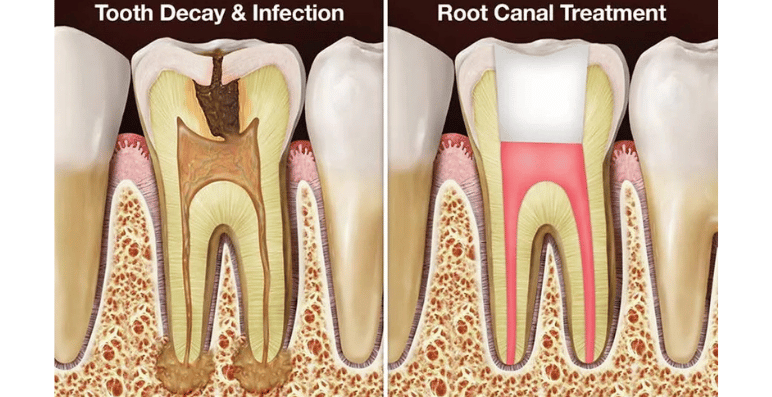
The dentist examines the tooth and usually takes an X-ray. After local anaesthetic numbs the area, an opening is made in the tooth. Infected or inflamed tissue is removed and the canals are cleaned and shaped. If treatment is not finished that day, medicine and a temporary filling may be placed inside the tooth.
For a simple overview of the complete process, read what happens during each root canal appointment.
Second sitting: checking and further cleaning
The dentist asks about pain, swelling and sensitivity since the first visit. The temporary filling is removed and the canals are checked. If the canals are dry and the tooth is comfortable, they may be filled and sealed. If infection or moisture remains, further cleaning and medication may be safer.
Worried about discomfort? See our simple guide: is the second root canal sitting painful?
Third sitting: final cleaning, sealing or protection
A third visit can be used to make sure the infection has settled, complete difficult canals, seal the canals or prepare the tooth for its permanent filling or crown. Your treatment plan may be different because every tooth has a different number and shape of roots.
Why might a root canal take three visits?
- Severe or long-standing infection: the dentist may need more time to disinfect the tooth.
- Curved, narrow or blocked canals: complex canals take longer to find, clean and shape.
- Swelling, pus or drainage: the tooth may need to settle before it is sealed permanently.
- Symptoms between appointments: continuing pain or tenderness needs to be checked.
- Previous root canal treatment: retreatment can be more complex than first-time treatment.
- A cracked or badly damaged tooth: the dentist must first decide whether the tooth can be restored safely.
- A separate restoration appointment: the crown or final filling may be planned after the canals are completed.
Is the third sitting of a root canal painful?
The tooth is normally numbed with local anaesthetic during treatment. You may feel pressure or movement, but you should tell the dentist if you feel sharp pain. Mild tenderness after an appointment can happen, especially when the tooth was badly inflamed or infected.
Contact your dentist promptly if pain is getting worse instead of better, swelling appears or increases, you develop fever, the temporary filling comes out, or the tooth feels too high when you bite. These signs need a clinical check.
What should you do between root canal visits?
- Do not chew hard or sticky food on the treated tooth while it has a temporary filling.
- Brush and clean the area gently as advised by your dentist.
- Take only medicines recommended for you and follow the given instructions.
- Keep the next appointment even if the tooth feels better.
- If the temporary filling breaks or falls out, contact the clinic rather than waiting.
Our root canal precautions guide explains what to do after treatment in more detail.
When is a crown needed after root canal treatment?
A root-filled tooth can be weaker because of the decay or damage that led to treatment. A crown is often recommended for a back tooth because it takes strong chewing pressure. The decision depends on how much healthy tooth remains, where the tooth is and how your bite works. Learn more about why a crown may be advised after root canal treatment.
Frequently asked questions
Does three root canal sittings mean the treatment failed?
No. Three appointments can be a planned and careful way to manage infection, complex canals or the final restoration. Only your dentist can judge progress after examining the tooth.
Can a root canal be completed in one sitting?
Yes, some teeth can be cleaned and sealed in one appointment. Other teeth are safer to treat over more than one visit. One method is not automatically better for every patient.
How long is the gap between root canal sittings?
The gap depends on the condition of the tooth and the dentist’s plan. Follow the date you are given. If symptoms increase before that date, contact the clinic earlier.
Why does my tooth still hurt before the next sitting?
The tissues around the root can remain tender for a short time. Pain that is severe, increasing or accompanied by swelling should be reviewed. If you are unsure whether your symptoms may come from an infected tooth, read the common warning signs of tooth infection.
Can I stop treatment when the pain goes away?
No. Pain relief does not confirm that the canals are fully cleaned and sealed. An unfinished tooth can become infected again, and a temporary filling is not designed to be the final protection.
Need a root canal check in Bibwewadi, Pune?
If you have tooth pain, swelling or questions about a planned second or third sitting, a dentist needs to examine the tooth and its X-ray before giving a personal answer.
Sources
This article gives general information and cannot replace an examination by a dentist. Information checked against the sources above on 24 August 2026.